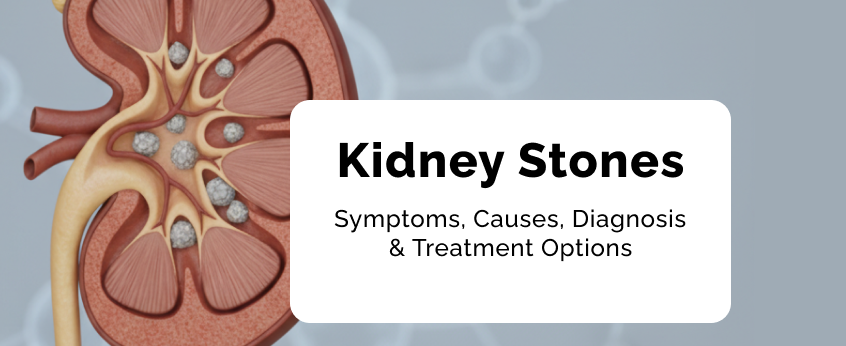
What Are Kidney Stones and How Do They Form?
Kidney stones are solid mineral deposits formed when urine becomes overly concentrated, allowing calcium, oxalate, uric acid, phosphate, or cystine to crystallize.
Primary Causes :
- Dehydration
- High sodium, animal protein, sugary drinks, excess vitamin C, and oxalate-rich foods
- Medical conditions: gout, diabetes, hyperparathyroidism, chronic UTIs, IBD, renal tubular acidosis
- Genetic disorders such as cystinuria
- Certain medications and urinary obstructions
- Obesity and family history
Types of Stones
- Calcium (oxalate/phosphate)
- Uric acid
- Struvite
- Cystine
Symptoms:
Severe flank pain (renal colic), nausea/vomiting, hematuria, urinary burning/urgency, cloudy/foul urine; fever suggests infection.
Complications & Treatment:
Potential obstruction or infection; management includes hydration, medications, or minimally invasive procedures (RIRS, URSL, PCNL, ESWL).
Smoking & Kidneys:
Smoking increases renal cancer risk and kidney damage; quitting improves circulation, blood pressure, and filtration within weeks.
Prevention:
Hydration, sodium reduction, balanced diet, smoking cessation, chronic condition control, and routine kidney monitoring.
Kidney stones are hard, crystalline deposits that develop inside the kidneys when minerals and salts in the urine become overly concentrated and begin to solidify. Under normal conditions, substances such as calcium, oxalate, uric acid, phosphate, and cystine remain dissolved in the urine. However, factors like inadequate fluid intake, dietary habits, certain medical or metabolic conditions, medications, genetic tendencies, or urinary tract blockages can change urine chemistry and make it easier for these minerals to crystallise.
As the urine becomes more concentrated or imbalanced, tiny crystals form and gradually grow into solid masses. A stone may stay within the kidney or move into the ureter that is the narrow tube that carries urine to the bladder. When a stone travels through this tight passage, it can cause the sudden, sharp, wave-like pain known as renal colic. While some small stones pass on their own, larger stones can obstruct urine flow, lead to infection, and cause significant discomfort. Early awareness of symptoms and timely evaluation help prevent complications and guide appropriate treatment, whether through increased hydration, medications, or minimally invasive procedures such as RIRS, URSL, PCNL, or ESWL.
What Are the Different Types of Kidney Stones?
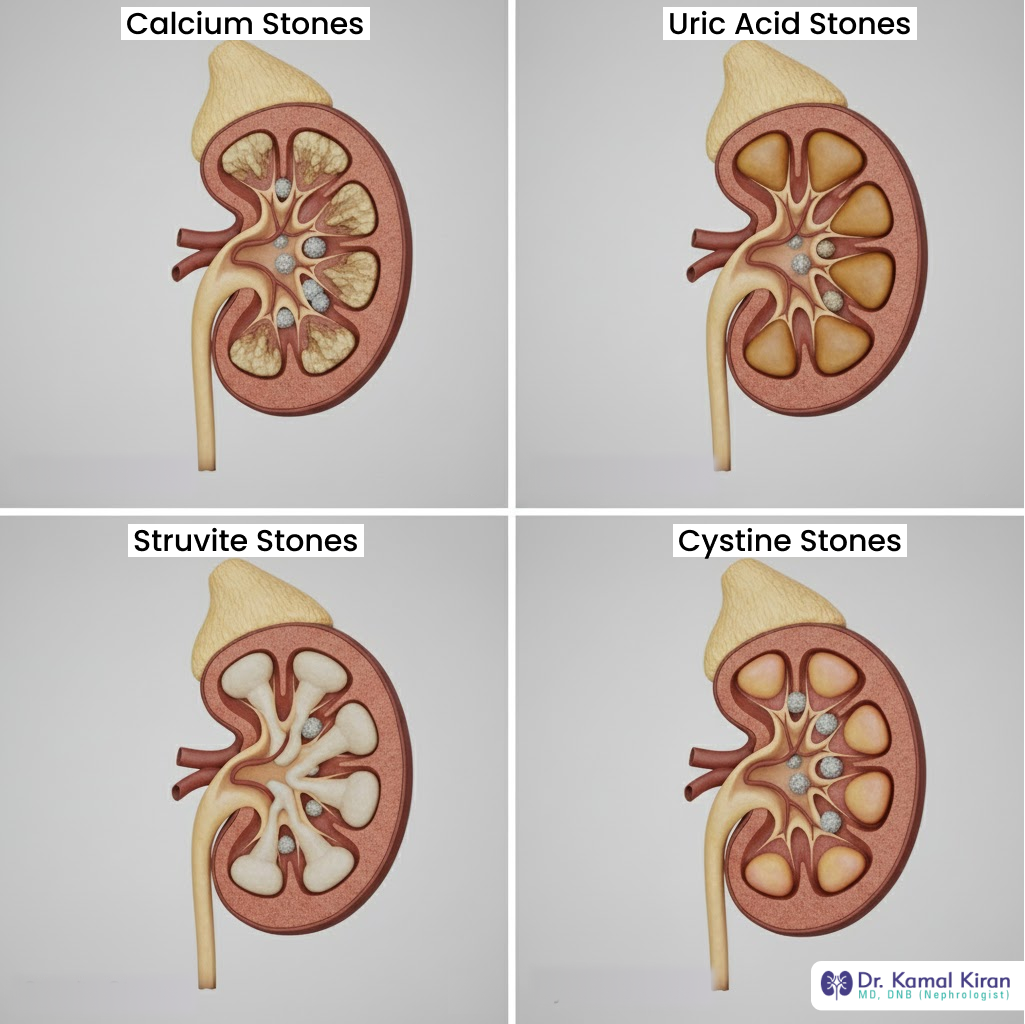
Kidney stones vary based on the minerals that make them up. The main types of kidney stones include Calcium stones, Uric acid stones, Struvite stones, and Cystine stones. Identifying the type of stone helps tailor treatment and prevention strategies.
- Calcium stones are the most common and usually appear as calcium oxalate stones. They form when calcium combines with oxalate, a naturally occurring substance found in many foods. Diets high in oxalate, low hydration, and high sodium intake frequently contribute to these stones. Calcium phosphate stones are less common and often associated with metabolic conditions or alkaline urine.
- Uric acid stones develop when urine becomes too acidic. People with gout, diabetes, obesity, or diets high in animal protein are more likely to form these stones. Uric acid stones may sometimes be dissolved with specific medications that alkalinize the urine.
- Struvite stones are typically associated with chronic urinary tract infections. They tend to grow quickly and can become quite large, sometimes forming “staghorn” stones that occupy significant portions of the kidney. These stones often require procedural management rather than medication alone.
- Cystine stones occur due to a rare inherited disorder called cystinuria, in which the kidneys excrete too much cystine into the urine. This leads to recurring stones and requires long-term management strategies focused on hydration and urine alkalinization.
What Are the Symptoms of Kidney Stones?
Symptoms depend on the stone's size, location, and movement. Some Kidney stones cause no noticeable symptoms until they shift within the kidney or enter the ureter. One of the most characteristic signs is a sudden, sharp, cramping pain felt in the back or side that may radiate toward the lower abdomen or groin. This pain often comes in waves and varies in intensity. Nausea or vomiting may accompany the discomfort because of its severity.
Other symptoms can include:
- Blood in the urine (a pink, red, or brown appearance)
- Frequent or urgent urination
- Burning sensations during urination
- Cloudy or foul-smelling urine
If fever or chills develop along with these symptoms, it may indicate a urinary tract infection , which requires prompt medical evaluation.
What Causes Kidney Stones?
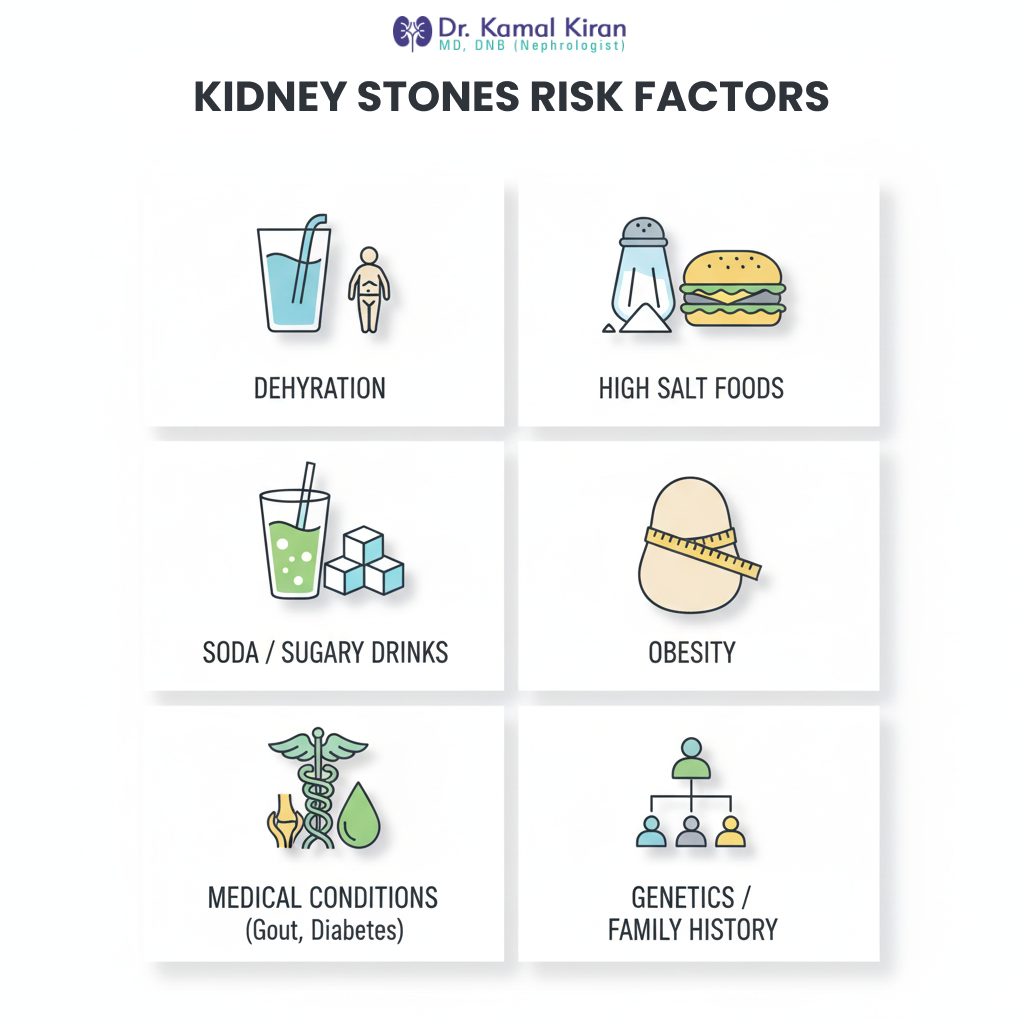
Kidney stones develop when the urine becomes too concentrated or chemically imbalanced, most often due to a combination of lifestyle habits, diet, medical conditions, medications, urinary tract issues, and genetic factors.
Lifestyle & Diet Factors:
- Dehydration: Low fluid intake concentrates minerals in urine.
- High sodium: Salt increases calcium excretion in urine.
- High animal protein: Can raise uric acid levels.
- Vitamin C supplements: Excess amounts may lead to oxalate stones.
- Sugary drinks / colas: Contribute to stone formation.
- Oxalate-rich foods: Spinach, beets, nuts, and chocolate increase oxalate in urine.
- Obesity: Alters urine chemistry and increases stone risk.
Medical Conditions That Increase Risk:
- Gout: High uric acid leads to uric acid stones.
- Diabetes: Alters urine composition.
- Hyperparathyroidism: Results in high calcium levels.
- Chronic UTIs: Can produce struvite stones.
- IBD (Crohn's disease, ulcerative colitis): Affects mineral absorption.
- Renal tubular acidosis: Makes urine more acidic in nature.
- Cystinuria: Rare genetic disorder causing cystine stones. Cystinuria: Rare genetic disorder causing cystine stones.
Medications:
- Long-term use of diuretics, calcium-based antacids, and certain anti-seizure drugs may increase kidney stone risk.
Other Causes:
- Urinary tract obstruction or blockages can cause stones.
- Previous stomach or intestinal surgeries may increase risk.
Family History / Genetics
- You're more likely to develop kidney stones if a close relative has had them.
- Inherited metabolic issues or naturally high mineral levels can also contribute.
How Are Kidney Stones Diagnosed?
Kidney stones are diagnosed using imaging tests, urine and blood analysis, and a clinical evaluation to determine the stone's size, location, and underlying cause. Evaluation usually begins with a thorough medical history and physical examination, which help assess pain patterns, urinary symptoms, dietary habits, hydration levels, current medications, and any previous stone episodes.
Imaging tests are the primary method for confirming the presence of stones:
- CT scan (non-contrast): Most accurate test; detects even tiny stones and identifies their size, shape, and exact location.
- Ultrasound: A radiation-free alternative, often preferred for pregnant individuals or for repeated monitoring.
- X-ray (KUB): Helps track certain calcium-containing stones but is less sensitive for small or radiolucent stones.
How Can Kidney Stones Be Prevented?
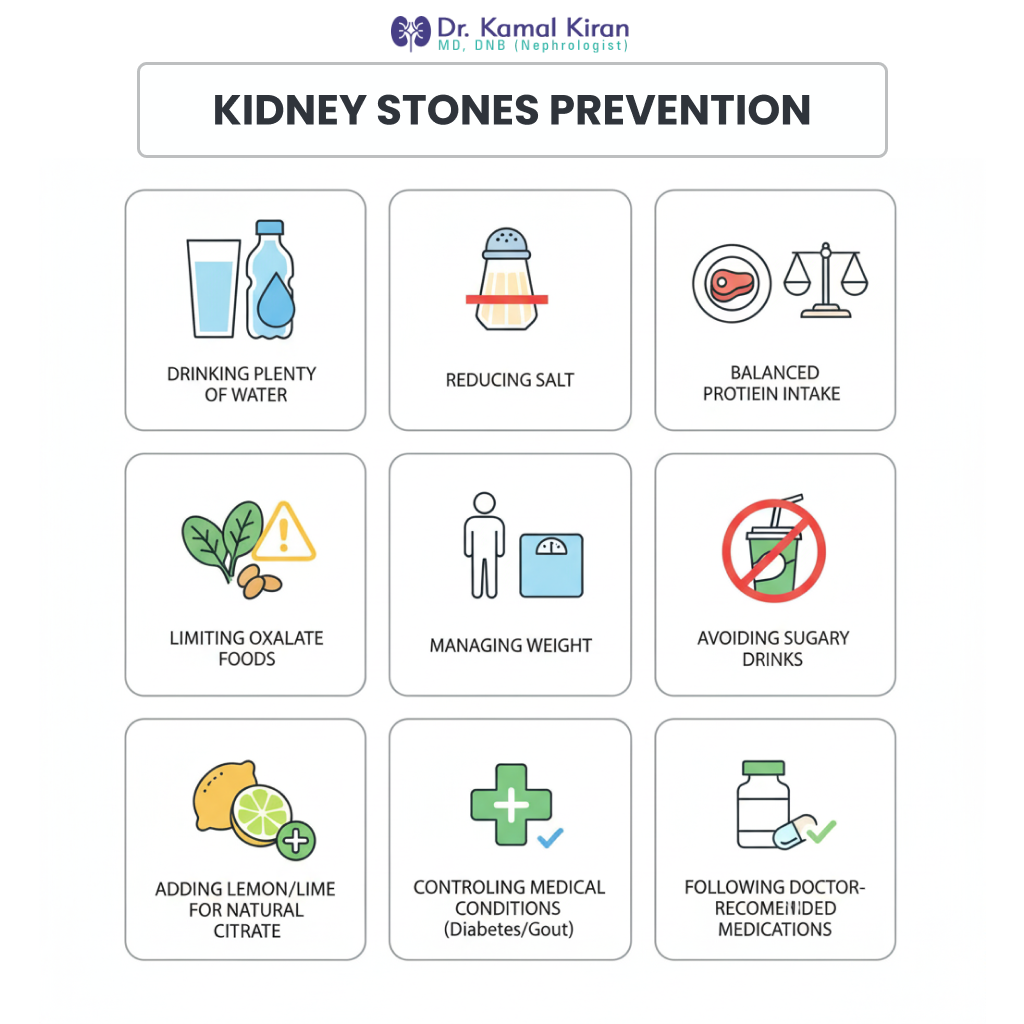
Kidney stones can often be prevented by staying well hydrated, making targeted dietary changes, maintaining a healthy lifestyle, and managing medical conditions that affect urine chemistry.
Adequate fluid intake is the most important preventive step. Most people should aim for 2.5 to 3 liters of fluid per day, or enough to keep the urine pale and clear. This helps dilute minerals and reduces the likelihood of crystal formation.
Dietary modifications play a key role in lowering stone risk:
- Reduce sodium intake Too much salt increases calcium in the urine.
- Moderate animal protein: Excess meat raises uric acid levels.
- Limit oxalate-rich foods: Spinach, beets, nuts, chocolate, and certain teas can raise oxalate levels.
- Include natural citrate sources: Lemon or lime can help prevent stone formation.
- Avoid sugary drinks and colas: These can alter urine chemistry and increase mineral buildup.
Lifestyle and health management further support prevention:
- Maintain a healthy body weight: Obesity changes urine composition.
- Control conditions like diabetes or gout: These directly influence urine acidity and mineral levels.
- Follow medical advice for medications: Some individuals benefit from drugs that adjust urine pH or reduce calcium, oxalate, or uric acid levels based on their stone type.

Dr. Kamal Kiran Mukkavilli, MBBS, MD, DNB
A highly respected expert in nephrology and renal transplantation, Dr. Kamal Kiran is known for advancing innovative treatments and delivering exceptional patient care. His practice emphasizes early intervention, precision medicine, and long-term kidney health.