Is Intermittent Fasting Good or Bad for Your Kidneys?
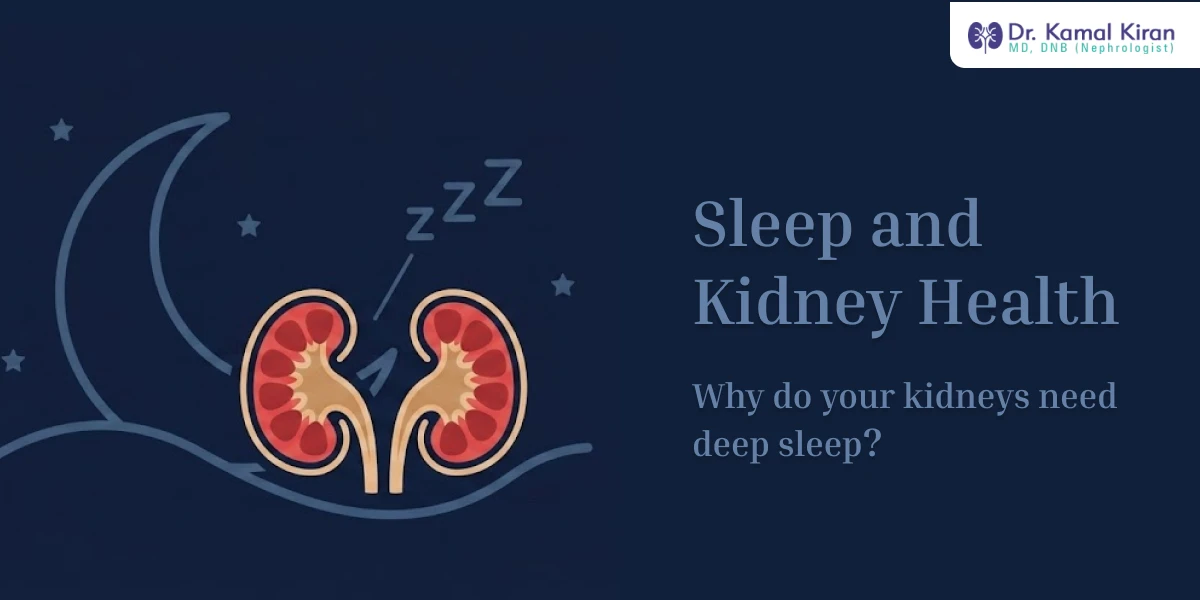
Yes, sleep is detox time for your kidneys. While they filter blood around the clock, nighttime is when the real repair happens. Blood pressure drops, hormones shift, and kidney cells do the maintenance work that simply cannot happen while you are awake. Break that window consistently, and you are not just losing rest, you are interrupting a cycle your kidneys depend on.
What Your Kidneys Actually Do While You Sleep
During sleep, your kidneys reduce filtration and focus on repair, supported by hormonal changes and lower blood pressure.
Not all hours are equal for your kidneys. During the day, they are in high-output mode, constantly filtering blood. At night, the body shifts gears. Blood pressure drops by 10–20%, what doctors call the “nocturnal dip”, allowing the tiny capillaries inside your kidneys a chance to relax and recover from the mechanical stress of the day. At the same time, the brain releases antidiuretic hormone (ADH), which signals the kidneys to slow urine production dramatically. This is why you don't need to wake up every hour to use the bathroom.
This reduced demand allows kidney cells to redirect energy toward repair and maintenance. The kidneys also run on a precise circadian rhythm. An internal clock governs when they filter aggressively, when they conserve water, and when they carry out repair. This is not a rough schedule, it operates at the level of individual genes inside kidney cells.
This is also why sleep and kidney health are so closely connected. Consistent, high-quality sleep gives the kidneys the uninterrupted repair time they depend on, while chronic sleep disruption places continuous stress on kidney function over time.
The Body Clock Your Kidneys Run On
Your kidneys follow a circadian rhythm that prepares them for rest and repair at night, and disrupting this rhythm can harm kidney function over time.
When that clock runs on a consistent schedule, kidney function stays stable. When it doesn't — shift work, irregular sleep, chronic late nights, the damage is quiet but cumulative. Research shows shift workers have higher rates of kidney function decline than day workers, independent of diet or blood pressure. It is the compounding cost of a repair cycle that is repeatedly cut short. Think of it like never quite finishing repairs before the next storm.
Research has shown a strong association between sleep and CKD , with irregular sleep patterns linked to faster kidney function decline over time. The role of sleep in CKD is now considered important enough that sleep quality is routinely discussed alongside blood pressure, diabetes control, and diet in long-term kidney care.
Even "social jet lag", shifting your sleep by more than two hours between weekdays and weekends, is enough to throw the kidneys' internal clock off. It cannot recalibrate fast enough to keep pace.
The takeaway: consistency matters as much as hours. Same bedtime, same wake time, that regularity is what keeps your kidneys' clock synchronised.
What Happens When You Have a Midnight Snack?
Midnight snacking disrupts the kidney’s repair cycle by triggering digestion, increasing blood pressure, and restarting filtration activity.
Eating late signals the body to switch back into active mode. Blood sugar rises, insulin is released, and blood pressure increases, all of which require the kidneys to resume processing fluids, salts, and metabolic waste. This interrupts the natural nighttime slowdown, reduces the blood pressure dip, and shortens the repair window.
For healthy individuals, occasional late-night eating is unlikely to cause lasting harm. However, for those with high blood pressure, diabetes, or early kidney disease, repeated disruption can increase long-term risk. If eating close to bedtime is unavoidable, keeping meals light and low in sodium helps reduce the burden. Heavy, protein-rich foods are the most taxing on the kidneys, while caffeine and alcohol further worsen sleep quality and reduce repair time.
How Much Sleep Do Your Kidneys Need?
For adults, 6 to 8 hours of sleep is the range your body needs to repair and rejuvenate for the following day. For children, it is 8 to 10 hours.
Below 6 hours consistently, the consequences are measurable, higher creatinine, faster decline in kidney function, more protein leaking into urine. On the other hand, Sleeping more than 9 hours regularly is also associated with poorer outcomes in large studies, though this more likely reflects underlying illness than excess sleep causing harm directly.
The sweet spot is 7–8 hours, at consistent times, without major interruption. Total hours alone are not enough, fragmented sleep reduces the proportion of deep, slow-wave sleep where most kidney repair actually happens.
Simple Habits to Protect Your Kidneys at Night
Protecting your kidneys at night mainly involves maintaining consistent sleep timing, avoiding late meals, and creating conditions for deep, uninterrupted sleep.
- Set a consistent wake time, including weekends. This anchors your circadian rhythm faster than anything else.
- Finish eating 2–3 hours before bed. Give digestion time to wind down before the repair window opens.
- Cut caffeine and alcohol after mid-afternoon. Both suppress deep sleep and increase overnight urine production.
- Keep your bedroom cool, dark, and quiet. Around 18–20°C supports the core temperature drop that accompanies deep sleep.
- If you snore heavily or wake unrefreshed, ask about a sleep study. Obstructive sleep apnea causes repeated oxygen dips and blood pressure surges overnight, which results in direct stress on kidney tissue.
For those already managing a kidney condition, these habits are not optional extras. Good sleep is part of the treatment.
Watch this short video to understand the effects of intermittent fasting on kidney health.

 Is Intermittent Fasting good or bad for you? | Dr Kamal Kiran

Frequently Asked Questions (FAQs)
Is water fasting good for kidneys?
Water fasting is not proven to improve kidney health. While short-term water fasting may be safe for some healthy adults, prolonged fasting can increase the risk of electrolyte imbalances and may stress the kidneys. People with chronic kidney disease (CKD) or other kidney conditions should avoid extended water fasts unless supervised by a healthcare professional.
Does fasting affect kidney function test results?
Yes, short-term fasting can transiently raise creatinine and BUN (blood urea nitrogen) levels, which may make kidney function appear worse on a standard panel than it actually is. If you are scheduled for a kidney function test, inform your doctor about any recent fasting so results are interpreted in the correct context.
Can fasting help heal kidneys?
Fasting cannot reverse established kidney damage, but it can slow progression by reducing inflammation, improving blood sugar control, and triggering autophagy in renal cells. The word "heal" sets an expectation fasting cannot reliably meet, “protect and support" is more accurate, particularly for those not yet in advanced CKD.
Is fasting good for kidney stones?
Intermittent fasting itself does not cause kidney stones, but dehydration during fasting can increase stone risk. When fluid intake drops, urine becomes more concentrated, making it easier for calcium oxalate and uric acid crystals to form. If you have a history of kidney stones, maintain adequate hydration throughout the fasting period and avoid prolonged dry fasting.

Dr. Kamal Kiran Mukkavilli, MBBS, MD, DNB
A highly respected expert in nephrology and renal transplantation, Dr. Kamal Kiran is known for advancing innovative treatments and delivering exceptional patient care. His practice emphasizes early intervention, precision medicine, and long-term kidney health.