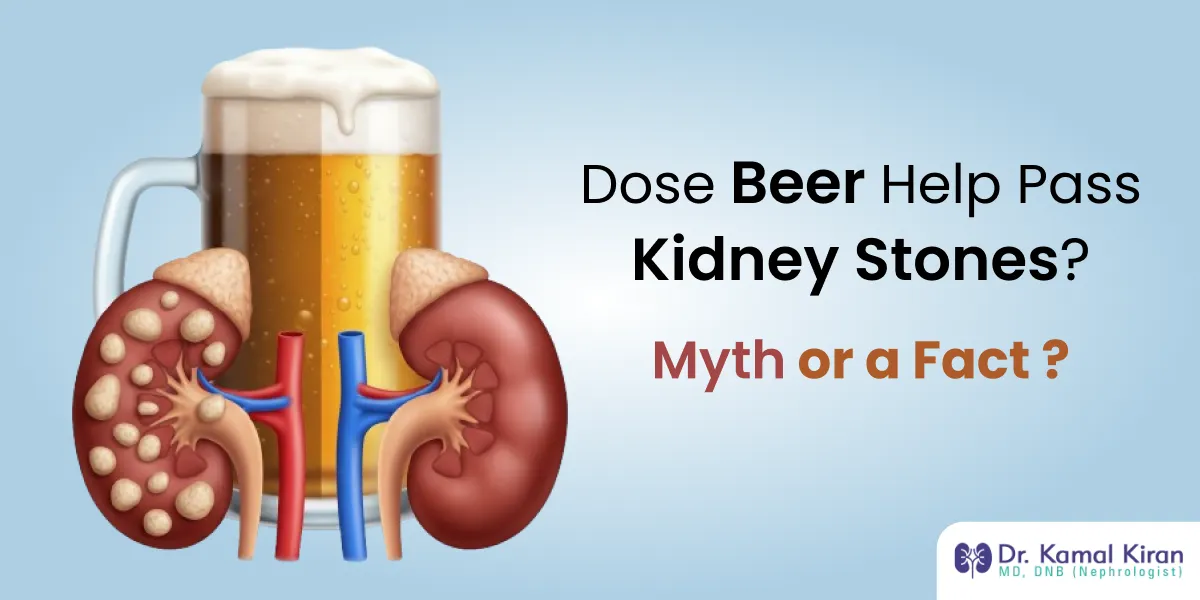
Does Beer Help Pass Kidney Stones ?
No, drinking beer does not help pass kidney stones. The belief that beer or toddy might “flush out” stones remains a persistent myth. Popular advice on social media and in social circles suggests reaching for a beer in hopes of relief, but this approach can actually worsen kidney stone risk. Beer contains oxalates and purines, which are proven to increase the likelihood of stone formation. Its temporary diuretic effect (Process of increasing urine output to remove excess fluid, salt, and waste) leads to dehydration, concentrating stone-forming minerals in urine and thus raising overall stone formation risk. The risk is further increased by obesity, a side effect of regular beer consumption.
Is Beer Bad for Kidney Stones?
Beer is not recommended as a treatment or preventive measure for kidney stones , nor does it offer protection as:
- Beer temporarily increases urine output; however, the long-term effect leads to dehydration, which results in concentrated minerals in urine and increases the risk of stone formation.
- Purines present in beer boost uric acid levels, hastening the development of uric acid stones.
- Oxalates found in beer can play a role in forming calcium oxalate stones, which are the most common type of stones.
- Excessive alcohol disrupts the body's water and mineral balance, creating favorable conditions for new stones.
Scientific research and clinical experts agree that beer is not recommended for treating or preventing kidney stones. No medical guidelines endorse beer as a therapy for kidney stones; indeed, they advise against it due to associated risks.
Best Practices for Kidney Stone Prevention
- Increase your daily water intake and adapt a low-salt kidney-friendly diet.
- Choose hydration sources such as plain water or prescribed fluids based on your doctor's advice.
- Avoid high-oxalate foods (spinach, nuts, sweet potatoes, etc) if prone to stones.
- Maintain a healthy weight and minimize salty, processed foods.
- Seek medical advice if experiencing pain, blood in urine, or symptoms of kidney stones.
Watch this short video for a quick explanation on how beer affects kidney stones:

 🍺 Does Beer Help Pass Kidney Stones? | Dr Kamal Kiran

Frequently Asked Questions (FAQs)
Is any type of alcohol safe for kidney stones?
All alcohol can cause dehydration and increase stone risk. None is recommended for passing stones.
Does wine cause kidney stones?
Yes, wine can be a cause for kidney stones if consumed in excess. Alcohol dehydrates the body, which makes stones more likely to form. It can also affect how your kidneys filter waste. So, if you already have or are prone to kidney stones, it's best to limit or avoid wine.
Is beer good for kidney infection?
No, beer is not good for a kidney infection. It can irritate the kidneys, worsen dehydration, and interfere with antibiotics. Stick to water and prescribed treatment.
Can you drink alcohol with kidney stones?
It is best to avoid alcohol while you have kidney stones. Alcohol can contribute to dehydration, making it harder for small stones to pass naturally. Drinking plenty of water is a better way to stay hydrated and support your kidneys.

Dr. Kamal Kiran Mukkavilli, MBBS, MD, DNB
A highly respected expert in nephrology and renal transplantation, Dr. Kamal Kiran is known for advancing innovative treatments and delivering exceptional patient care. His practice emphasizes early intervention, precision medicine, and long-term kidney health.