Potassium and Kidney Disease: What You Need to Know
Potassium is an essential mineral that plays a key role in keeping your heart, muscles, and nerves working properly. For people with healthy kidneys, potassium levels stay balanced naturally. But if you have kidney disease , your body may struggle to regulate potassium, allowing it to build up in the blood. This can silently impact your heart and overall health, making it vital to understand the connection between potassium and kidney function and how to manage it safely.
Potassium Levels in the Human Body and Role of the Kidneys
In healthy individuals, kidneys maintain potassium within a narrow range by filtering out any excess through urine.
- The normal serum potassium level is 3.5-5.0 mmol/L, and
- Even small increases can affect heart rhythm.
When kidney function declines, this filtering becomes less efficient, allowing potassium from food or natural body processes to accumulate gradually in the blood. Over time, this can contribute to complications like rise in blood potassium levels,making regular monitoring essential for kidney patients.
High Potassium in Kidney Disease: What Is Hyperkalemia?
Hyperkalemia refers to abnormally high potassium levels in the blood. For kidney patients, it is one of the most dangerous complications.
- Potassium levels above 6.0-6.5 mmol/L can make the heart's electrical signals unstable
- This can lead to fatal heart rhythm disturbances or sudden cardiac arrest
The challenge is that many patients feel no symptoms until potassium levels are already high, which is why regular blood tests are critical.
Why Doctors Ask Kidney Patients to Avoid Bananas and Coconut Water
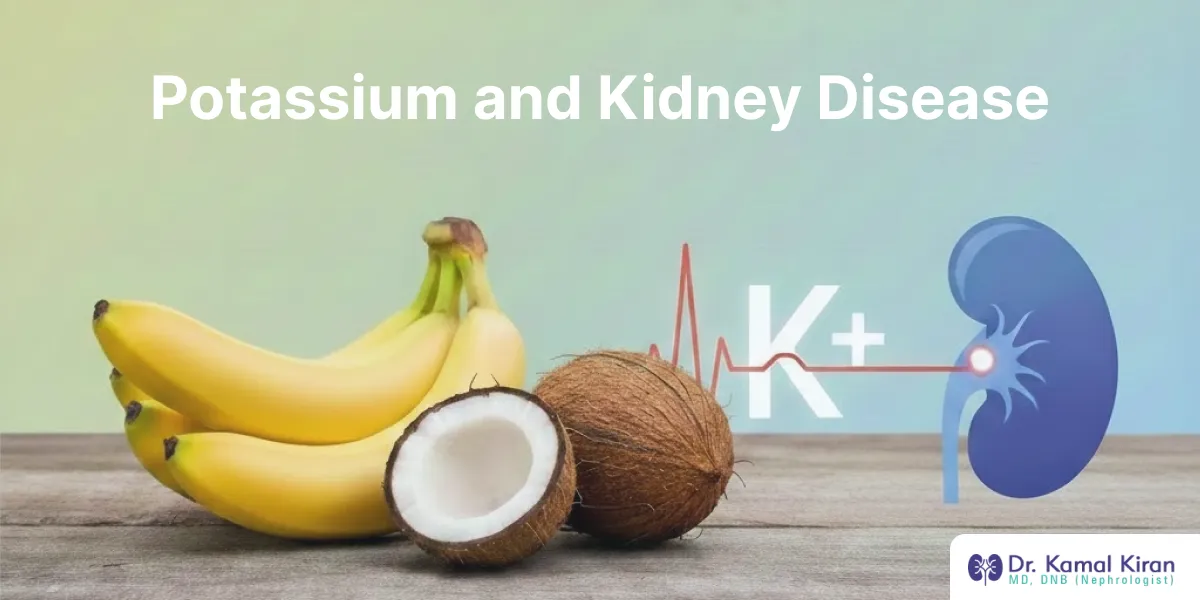
Bananas and coconut water are extremely rich sources of potassium. While healthy kidneys can remove the excess easily, damaged kidneys cannot.
- Even eating 2-3 bananas can sharply raise potassium levels in the body
- Sudden rises in potassium can directly affect heart function
This is why doctors strictly advise kidney patients especially those with advanced CKD to avoid these foods, particularly in large quantities.
Medications That Increase Potassium Levels in Kidney Disease
Many kidney patients take medications to protect kidneys and control blood pressure, especially if they have diabetes or hypertension:
- ACE inhibitors (Ramipril)
- ARBs (Losartan, Telmisartan)
- Potassium-sparing diuretics
While these drugs protect kidneys and manage blood pressure, they can raise potassium levels significantly. Regular monitoring is essential to prevent hyperkalemia.
Common Causes of High Potassium in CKD Patients
High potassium usually occurs due to a combination of factors:
- Reduced kidney excretion of potassium
- High-potassium foods in the diet
- Blood pressure medications
- Poorly controlled diabetes
- Acid buildup (metabolic acidosis)
This is why potassium management must be individualized for every kidney patient.
Managing High Potassium Levels in Kidney Disease
- Dietary Control
Avoid high-potassium foods:
- Bananas, oranges, coconut water
- Potatoes, tomatoes, spinach
- Dried fruits, nuts, beans
Prefer lower-potassium alternatives:
- Apples, berries
- Cabbage, cauliflower, carrots
- Rice, fish, chicken
- Medication Review
- Never stop blood pressure medications without a doctor's advice
- Your doctor may adjust doses or prescribe potassium-lowering agents
- Potassium Binders
- Some patients use medications that bind potassium and remove it through the stool
- Dialysis Patients
- Completing every dialysis session fully is crucial, as dialysis removes excess potassium from the blood
When to Consult a Doctor for High Potassium
Kidney patients should consult a doctor immediately if they experience symptoms such as muscle weakness, irregular heartbeat, chest discomfort, or shortness of breath. A potassium level above 6.0 mmol/L is a medical emergency and requires urgent treatment. Regular blood tests are essential, as high potassium can become dangerous even without obvious symptoms.
Watch this short video for a quick explanation on the relationship between Potassium and Kidney Disease:

 Potassium and Kidney Disease: What You Need to Know | Dr Kamal Kiran

Frequently Asked Questions (FAQs)
How to flush excess potassium?
Excess potassium is managed with potassium binders, dialysis, dietary changes, and medication adjustments. Never try to flush it at home without medical supervision.
What causes high potassium levels in elderly?
High potassium levels in the elderly usually occur due to reduced kidney function, medications like ACE inhibitors, ARBs, or potassium-sparing diuretics, high-potassium diets, and conditions such as diabetes or metabolic acidosis. Age-related decline in kidney efficiency makes them more susceptible to hyperkalemia even with normal potassium intake.
Symptoms of high potassium in CKD patients
High potassium (hyperkalemia) often has subtle early signs in CKD patients. Common symptoms include muscle weakness, fatigue, tingling or numbness, nausea, and irregular heartbeat. Frequently, it is first detected only on a blood test.
What are the 10 signs of high potassium?
High potassium levels, known as hyperkalemia, can affect the heart, muscles, and nerves. Common signs may include muscle weakness, fatigue, tingling or numbness, nausea, vomiting, irregular or slow heartbeat, chest pain, shortness of breath, and palpitations. In many cases, hyperkalemia is first detected through a blood test, especially in people with kidney disease.

Dr. Kamal Kiran Mukkavilli, MBBS, MD, DNB
A highly respected expert in nephrology and renal transplantation, Dr. Kamal Kiran is known for advancing innovative treatments and delivering exceptional patient care. His practice emphasizes early intervention, precision medicine, and long-term kidney health.