Common Pain Relief Medicines and Kidney Damage: What You Should Know
Kidney damage can occur with regular or long-term use of painkillers, especially when medicines are taken frequently, in high doses, or without medical supervision. Many people use pain relief tablets for headaches, joint pain, back pain, or leg pain without realizing how often they rely on them. Over time, these medicines can silently affect kidney function. Understanding kidney damage reasons, early warning signs, and safer pain relief choices can help prevent long-term kidney problems.
How Painkillers Damage the Kidneys ?
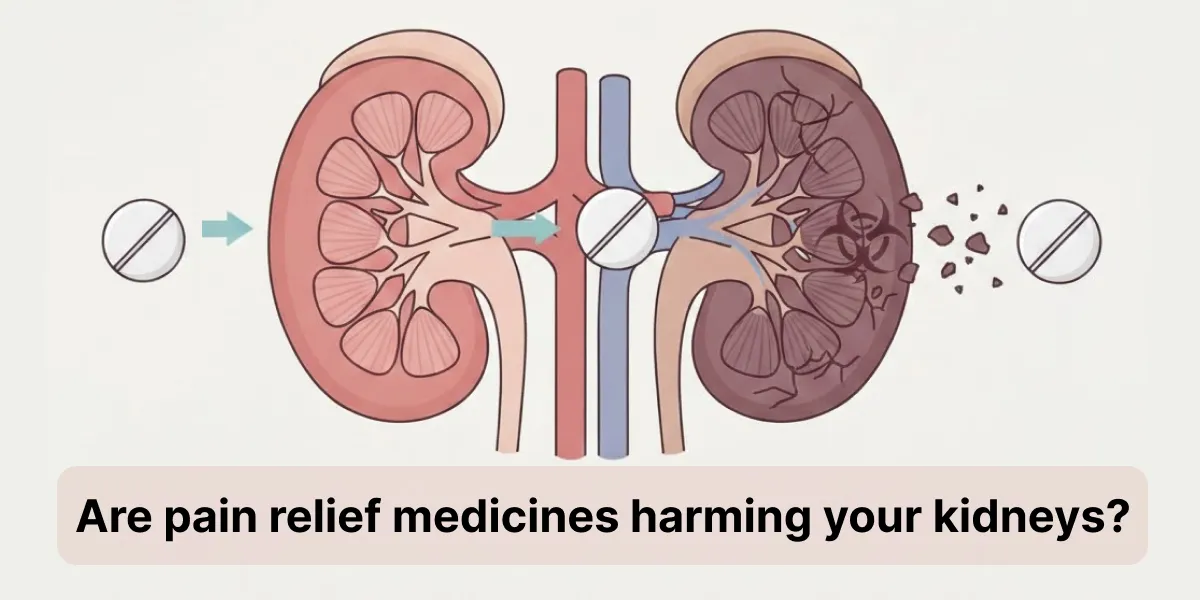
Painkillers damage the kidneys mainly by reducing blood flow to vital kidney structures and injuring delicate filtering units. The kidneys depend on good blood circulation to clean the blood and remove waste efficiently.
With repeated or long-term use:
- Blood vessels supplying the kidneys can narrow
- Filtration becomes less effective
- Inflammation can develop inside kidney tissue
- Damage worsens when the body is dehydrated
Over time, this may cause sudden kidney injury or gradual loss of kidney function, common kidney damage reasons seen in clinical practice.
Long-term painkiller use can also lead to analgesic nephropathy, a condition where parts of the kidney lose blood supply and begin to die (renal papillary necrosis). Small pieces of kidney tissue may detach and pass into the urine. These fragments can block urine flow, cause severe pain, blood in urine, and repeated infections. Continued exposure can progress to chronic kidney disease.
Which Painkillers Are More Likely to Harm the Kidneys?
Painkillers that interfere with kidney blood flow or are taken frequently over long periods are more likely to cause harm. Many commonly used NSAIDs fall into this category and are well-known medications that damage kidneys when misused.
Common examples include:
- Ibuprofen
- Diclofenac
- Aceclofenac
- Naproxen
- Aspirin
- Combination painkillers with multiple ingredients
These NSAID drugs are often used as pain relief medicines for headache, joint pain, NSAIDs for migraine, or for gout. The risk increases when tablets are taken daily, combined with other painkillers, or used during dehydration or illness. These are well-recognized adverse effects of NSAIDs.
Who Is at Risk and What Warning Signs to Watch For?
Certain people are more vulnerable to painkiller-related kidney injury. Those at higher risk include:
- People with existing kidney disease
- Individuals with diabetes or high blood pressure
- Older adults
- People who are frequently dehydrated
- Those who regularly combine multiple painkillers
In these groups, even moderate use can increase the risk of kidney damage.
The signs of kidney damage are often subtle early on and may be missed. As damage progresses, symptoms may include:
- Changes in urination (reduced urine, foamy urine, darker color)
- Swelling of the feet, legs, or face
- Persistent fatigue or weakness
- Shortness of breath
- Nausea or metallic taste
- Back or flank pain
Because symptoms often appear late, routine blood and urine tests are essential for early detection
Can Kidney Damage Be Repaired or Reversed After Stopping Painkillers?
Many patients ask, can kidney damage be repaired or can kidney damage be reversed. The answer depends on how early the problem is detected
Mild or early kidney injury may improve after stopping the offending painkiller and correcting contributing factors such as dehydration. However, once chronic kidney disease develops, the damage is usually permanent. Treatment then focuses on slowing progression and preventing complications rather than complete recovery.
Safe Pain Relief and Kidney Protection Tips
Protecting kidney health starts with responsible painkiller use. Doctors generally advise patients to:
- Use painkillers only when truly necessary
- Avoid daily or long-term use
- Stay well hydrated
- Avoid mixing painkillers without medical advic
- Consult a doctor if pain persists
- Know when to avoid NSAIDs
For people with kidney disease, safer options focus on individualized care. A pain reliever for kidney patients may include carefully dosed paracetamol and non-drug approaches. Kidney safe pain killers should always be discussed with a doctor, especially in advanced disease.
Patients on dialysis should regularly review their dialysis medications list with their healthcare team to reduce unnecessary kidney stress.
Watch this short video to find out if pain killers affect kidneys negatively

 Long-term painkiller & NSAID use can harm your kidneys. Learn risks, warning signs, and safer

Frequently Asked Questions (FAQs)
What are the symptoms of ibuprofen kidney damage?
Symptoms include reduced urine output, swelling of the legs or face, fatigue, nausea, and back or flank pain. Some people may notice foamy urine or shortness of breath. Early damage may have no symptoms and is often detected only through tests.
Is paracetamol safe for kidney patients?
Yes, paracetamol is safe for kidney patients when taken in recommended doses and for short durations. Long-term misuse should be avoided.
What pain reliever does not damage the kidneys?
No pain reliever is completely risk-free, but paracetamol is often considered the safest option when used correctly.
Can naturopathic or alternative medicines cause kidney damage?
Yes, some naturopathic medicine products can harm the kidneys. Certain remedies may contain hidden pain-relieving substances and long-term use can expose kidneys to harmful compounds without the patient realizing it.

Dr. Kamal Kiran Mukkavilli, MBBS, MD, DNB
A highly respected expert in nephrology and renal transplantation, Dr. Kamal Kiran is known for advancing innovative treatments and delivering exceptional patient care. His practice emphasizes early intervention, precision medicine, and long-term kidney health.