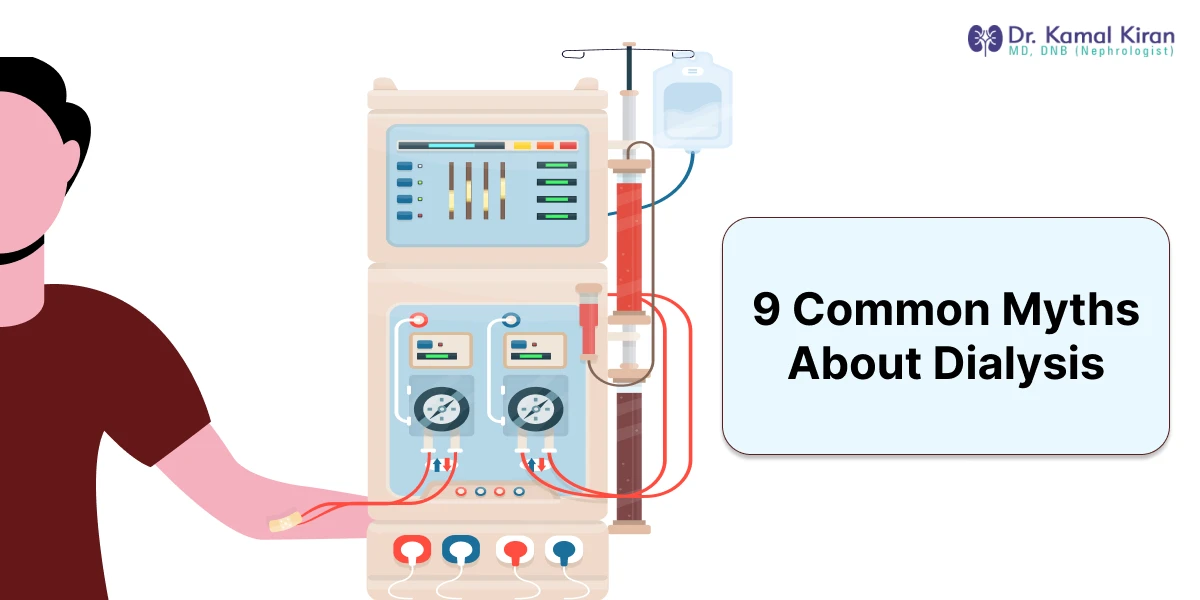
9 Common Myths About Dialysis : What Patients Really Need to Know
Dialysis is often misunderstood, leading to fear and delayed treatment. In reality, dialysis is a life-sustaining, generally painless treatment that helps people with kidney failure live longer, healthier, and more active lives. While it does require lifestyle adjustments, most patients continue working, traveling, and maintaining a good quality of life with proper planning and care.
The most common myths about dialysis:
- Dialysis is Always Painful.
- Time during dialysis can be spent reading, watching TV, sleeping, or relaxing.
- Discomfort usually reduces over time.
- Options like numbing creams can help with needle sensitivity.
- Dialysis a Death Sentence.
- Dialysis is Permanent and you can't Stop It.
- Less Dialysis is Better for the Body.
- Dialysis Patients don't live a Normal Life and can't Travel.
- Dialysis is only for the Elderly.
- Dialysis is the Same for Everyone.
- Dialysis means Giving Up Your Favourite Foods.
- You can skip Dialysis If You Feel Fine.
No, dialysis is not always painful. Most patients experience only mild discomfort during needle insertion, while the procedure itself is generally painless. Many patients walk into a dialysis session and leave the same way, even after 4 hours of treatment.
Dialysis often helps patients feel better overall by removing toxins from the body.
Dialysis is not the end of life, it is what supports life when the kidneys are no longer able to function adequately.
By acting as a substitute for the kidneys, dialysis removes waste products and excess fluid from the body. This helps stabilize overall health and allows people to continue living with better energy and fewer symptoms.
Many individuals stay on dialysis for years while maintaining their routines, and it also provides time for other treatment options, including transplantation, when appropriate.
Many people wonder is dialysis permanent. It is not always permanent, but it is not something that can be stopped casually either. It functions as a replacement for kidney activity. When the kidneys are unable to perform their role, dialysis takes over that function. In temporary conditions, such as acute kidney injury, it may be stopped once recovery happens.
However, in long-term kidney failure, stopping dialysis without an alternative means the body no longer has a way to remove toxins and maintain balance.
It may seem like fewer dialysis sessions would be easier, but this is a common misunderstanding. Healthy kidneys work continuously, 24 hours a day, every day. Dialysis, on the other hand, is usually done only once every few days for a few hours at a time. This already means the body is receiving far less filtration than it naturally would.
Because of this, dialysis is essentially doing only a part of the job that healthy kidneys would normally handle. Reducing sessions further or skipping them leads to a buildup of toxins and fluid in the body.
In simple terms, adequate and consistent dialysis leads to better cleaning of the blood and better overall health.
Dialysis becomes a part of the routine, but it does not take away independence or normalcy.
Since sessions are scheduled only a few times a week, patients often continue working, managing their daily responsibilities, and staying socially active. The time spent during dialysis can also be used productively or for rest.
Travel is possible with planning, as dialysis sessions can be arranged at different centers in advance. With a structured approach, most people are able to maintain a lifestyle that feels familiar and manageable.
Dialysis is based on kidney function, not age. People of different age groups, including younger individuals may require dialysis depending on the cause of kidney failure. Conditions like diabetes, hypertension, genetic disorders, or autoimmune diseases can affect kidney health at various stages of life.
Dialysis is not a one-size-fits-all treatment. It is tailored based on individual needs. Different types of dialysis, such as hemodialysis and peritoneal dialysis, are chosen depending on the patient's condition, lifestyle, and medical requirements. Even the frequency and duration of sessions may vary.
This personalized approach ensures that treatment is as effective and manageable as possible.
Dietary changes are part of managing kidney disease, but it does not mean completely giving up everything you enjoy.
Food choices are usually adjusted based on individual health needs, focusing on balance and moderation rather than strict elimination. With proper guidance, many patients are still able to include their preferred foods in controlled portions.
Even if there are no obvious symptoms, dialysis should not be skipped. As, waste and fluid can build up in the body without immediate warning signs. Missing sessions disrupts the balance that dialysis is maintaining and can lead to complications over time.
Regularity plays a crucial role in keeping the body stable.
Watch this short video to understand common myths about dialysis and the truth behind them:

 Dialysis Myths Debunked: What Patients Need to Know | Dr. Kamal Kiran

Frequently Asked Questions (FAQs)
Is dialysis reversible?
It can be temporary in certain conditions, but in chronic kidney disease, it is usually ongoing unless a transplant is done.
Can dialysis make your legs weak?
Some patients may feel weakness or fatigue in their legs, particularly after a dialysis session. This is usually temporary and can improve with proper nutrition, fluid balance, and regular treatment. Persistent weakness should be discussed with a healthcare provider.
Is 2.5 creatinine level need dialysis?
A creatinine level of 2.5 mg/dL alone does not mean dialysis is required. The decision depends on overall kidney function, symptoms, and other test results. Dialysis is typically needed in advanced stages of kidney failure, not based on a single number.
Is dialysis hard on the body?
Dialysis does require some adjustment, but it is not as hard on the body as untreated kidney failure. It helps remove toxins and maintain balance, often improving symptoms like fatigue, swelling, and loss of appetite over time.
How do dialysis patients die?
Dialysis patients do not die from dialysis itself. They usually die due to underlying health conditions or complications, most commonly heart disease, infections, or complications related to kidney failure. In some cases, if dialysis is stopped without an alternative like a transplant, toxins and fluid build up in the body, which can lead to death over time.

Dr. Kamal Kiran Mukkavilli, MBBS, MD, DNB
A highly respected expert in nephrology and renal transplantation, Dr. Kamal Kiran is known for advancing innovative treatments and delivering exceptional patient care. His practice emphasizes early intervention, precision medicine, and long-term kidney health.