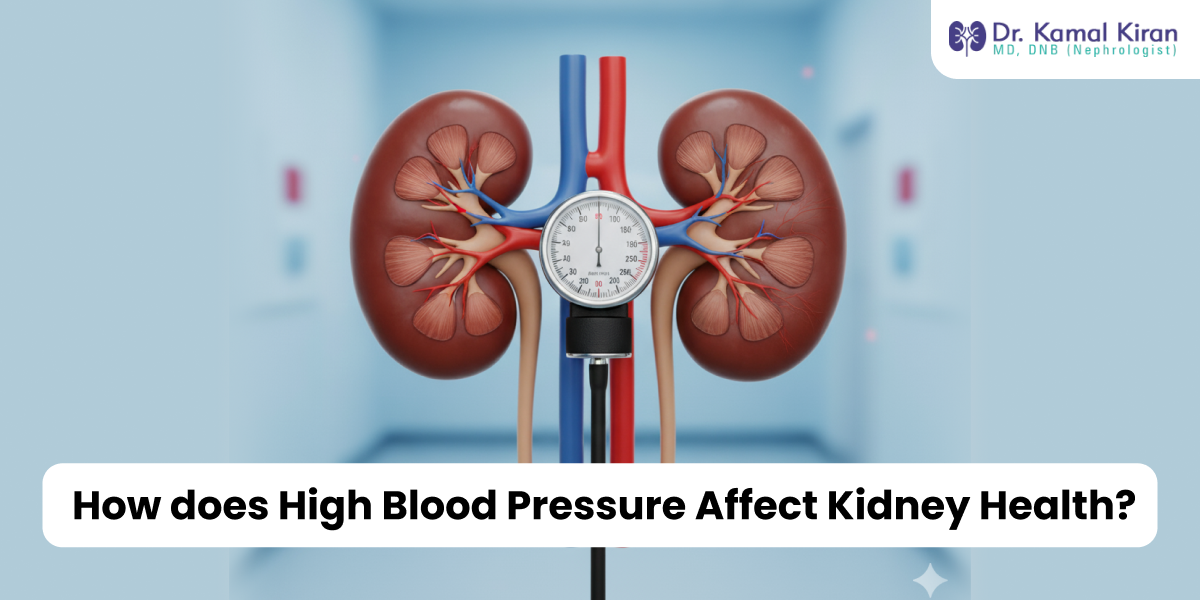
How High Blood Pressure Affects Kidney Health
High blood pressure damages your kidneys by forcing blood through their delicate filters with excessive pressure, causing gradual wear and tear that leads to kidney failure over time.
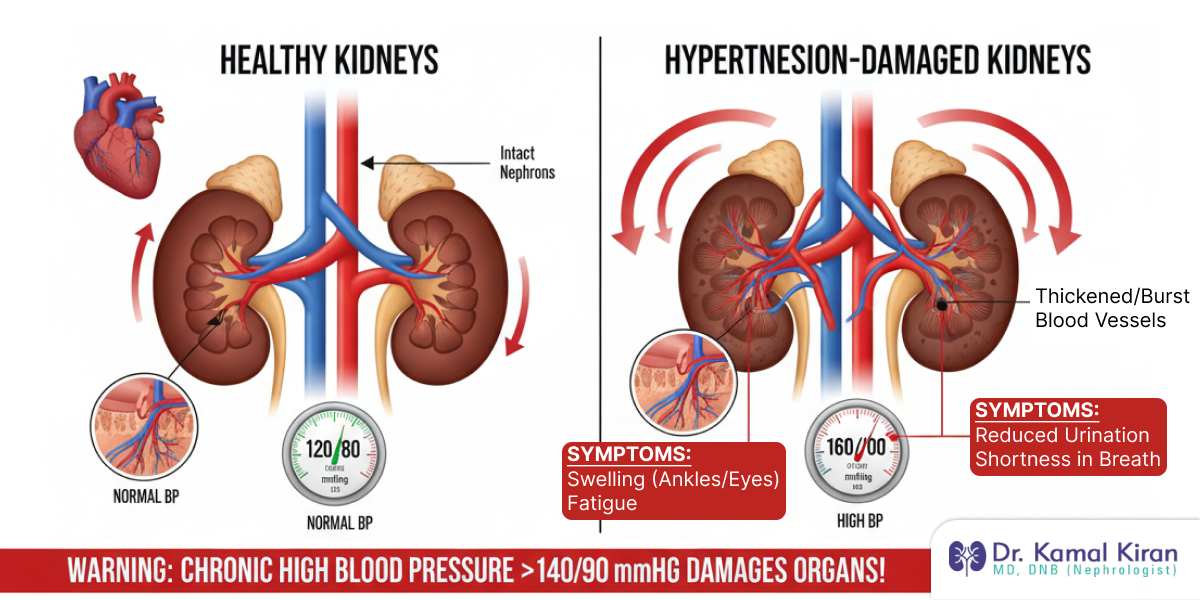
Every spike in blood pressure is like a strike against your kidneys! Each kidney contains nearly 10 lakh tiny filters (nephrons) that clean waste from your blood. These filters are as thin and fine as strands of hair. When your blood pressure rises beyond the normal 120/80 mmHg, the pressure transmitted into these microscopic vessels also increases.
For instance, at 150-170 mmHg, the force can rupture or scar these filters. Once one filter is damaged, the neighboring ones bear more load, creating a domino effect that gradually leads to Kidney damage or Chronic Kidney Disease (CKD).
How Common Is Kidney Damage Due to High BP?
About 30-40% of people with kidney failure have high blood pressure as a major cause. When combined with diabetes, the risk escalates to 60-70%. Together, these two “silent killers” form the leading cause of kidney disease worldwide.
Signs You Should Check Your Blood Pressure Regularly
Even without symptoms, high BP can silently damage kidneys for years. You should check your BP:
- Once every 1-2 months if you are healthy
- More frequently if you have diabetes or a family history of hypertension
- Immediately if you experience headaches, fatigue, or swelling in your legs or face
Early detection prevents irreversible kidney damage.
Practical Tips to Protect Your Kidneys from High BP
Keeping your blood pressure under control is one of the most effective ways to prevent kidney damage and maintain long-term kidney health.
- Maintain a target BP of less than 130/80 mmHg
- Reduce salt intake, especially in processed foods
- Stay well-hydrated but avoid overconsumption
- Exercise regularly as it helps to actually decrease blood pressure
- Avoid over-the-counter painkillers (NSAIDs) as they worsen BP control
- Monitor both creatinine and urine protein regularly if you have hypertension
When to See a Kidney Specialist
Seek consultation if:
- You have BP higher than 140/90 mmHg despite medication.
- There's protein loss or blood in your urine.
- You experience swelling, fatigue, or decreased urine output.
- You have Diabetes along with uncontrolled BP.
Recommended Tests
For complete assessment, your doctor may suggest:
- Serum Creatinine-Test
- Urine Protein-Test
- Renal Ultrasound Scan
- eGFR (Glomerular Filtration Rate) evaluation
Watch this short video for a quick explanation on how High Blood Preassure affects your kidneys:

 Watch this short video for a quick explanation on how High Blood Preassure affects your kidneys:

Frequently Asked Questions (FAQs)
Can high blood pressure cause kidney damage even if I feel healthy?
Yes. High BP silently damages kidney filters over years without any early symptoms. Regular monitoring is essential.
Can kidney damage from hypertension be reversed?
Early-stage damage can be slowed or stabilized with strict BP control and lifestyle changes, but advanced damage is usually permanent.
Which blood pressure level is considered dangerous for your kidneys?
A consistent reading above 140/90 mmHg can be harmful to kidney health. Over time, this elevated pressure damages the microscopic blood vessels in the kidneys, leading to reduced filtration capacity and chronic kidney disease if left unchecked.
How can I naturally protect my kidneys if I have high BP?
You can slow down kidney damage by maintaining a low-salt diet, exercising regularly, keeping blood sugar in control, and avoiding smoking or excess painkiller use. Monitoring your BP at home and following medical advice on medications are equally important for long-term kidney protection.

Dr. Kamal Kiran Mukkavilli, MBBS, MD, DNB
A highly respected expert in nephrology and renal transplantation, Dr. Kamal Kiran is known for advancing innovative treatments and delivering exceptional patient care. His practice emphasizes early intervention, precision medicine, and long-term kidney health.